What If the Future Is Emerging Where Development Rarely Looks?
Recently, I participated in the National Gathering of the Movimento Futuro Local (Local Futures Movement) in São Paulo, facilitating a conversation on cooperation, collaboration, and territorial networks alongside leaders I deeply admire, including Thiago Vinicius, whose work has helped broaden discussions on urban peripheries, territorial justice, and community leadership in Brazil.
Throughout the conversations, one question kept echoing in my mind:
Why do we continue looking for solutions for territories outside of them when many of the answers already exist within them?
For decades, we have been taught to associate development with economic growth, productivity, attracting investment, and integration into global markets. Under this logic, entire communities have come to be defined by what they supposedly lack—infrastructure, income, technology, training—rather than by what they possess.
The result has been a kind of permanent colonization of the imagination. We learned to look at territories as places in need of solutions, rather than as territories capable of generating knowledge.
As Ailton Krenak reminds us, one of the great tragedies of our time is the belief that there is only one legitimate way of living, producing, and prospering. Everything that falls outside this narrative is treated as backward, informal, or insufficient.
But what if we are looking in the wrong place?
This question has accompanied me ever since I had the opportunity to co-create, together with a broad network of partners, community leaders, educators, social organizations, and residents, the Brincar é Direito (The Right to Play) movement.
The movement was born from a simple yet profoundly transformative premise: children are not merely beneficiaries of public policies. They are protagonists of the territories where they live.
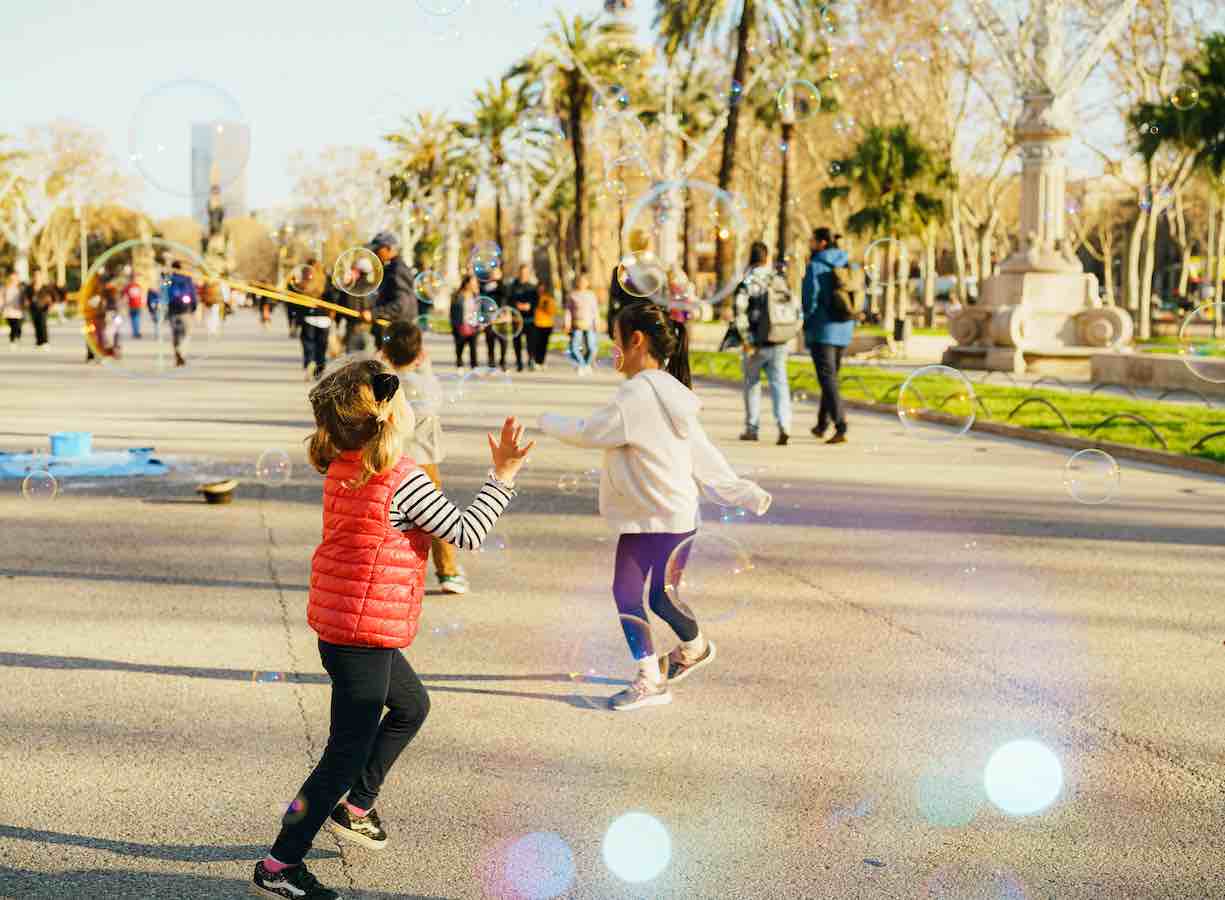
When a child plays, they reveal much more than imagination.
They reveal belonging.
They reveal safety—or the lack of it.
They reveal encounters and absences.
They reveal the spaces that welcome and the spaces that exclude.
They reveal memories, relationships, and possibilities for the future.
For this reason, from the very beginning, we understood that it made little sense to arrive in communities with ready-made methodologies or pre-packaged answers.
Inspired by Paulo Freire's thinking, we chose a more challenging path:
Listening before proposing.
Building before delivering.
Learning before teaching.
The methodology we developed was not born in a meeting room far removed from local realities. It was built through continuous dialogue with those who live in, care for, and transform these territories every day.
For a long time, we have been conditioned to believe that legitimate solutions come from experts, central governments, or external organizations. Even when well-intentioned, many interventions end up reproducing a logic in which territories are seen as recipients of knowledge rather than producers of knowledge.
Brincar é Direito taught us the opposite. Transformation becomes more powerful when local knowledge ceases to be merely consulted and instead occupies the centre of decision-making. When residents, educators, community leaders, and children do not simply participate in a process but help define its directions, priorities, and meanings.
It was through this process that I came to understand something fundamental: the most valuable resources of a community rarely appear in economic indicators.
They reside in relationships.
In trust.
In collective memory.
In the capacity to cooperate.
In shared culture.
In everything that keeps a community alive despite successive layers of institutional neglect.
This understanding resonates deeply with Milton Santos's reflections that territory is not merely a piece of land or a physical space. Territory is ground plus identity. It is the lived, experienced, and meaningful space created by those who inhabit it.
Perhaps that is why one of the movement's greatest discoveries was realizing that play is not merely a childhood activity.
Play is a way of inhabiting a territory.
A way of creating relationships.
A way of strengthening community trust.
A way of transmitting culture across generations.
A way of exercising autonomy and belonging.
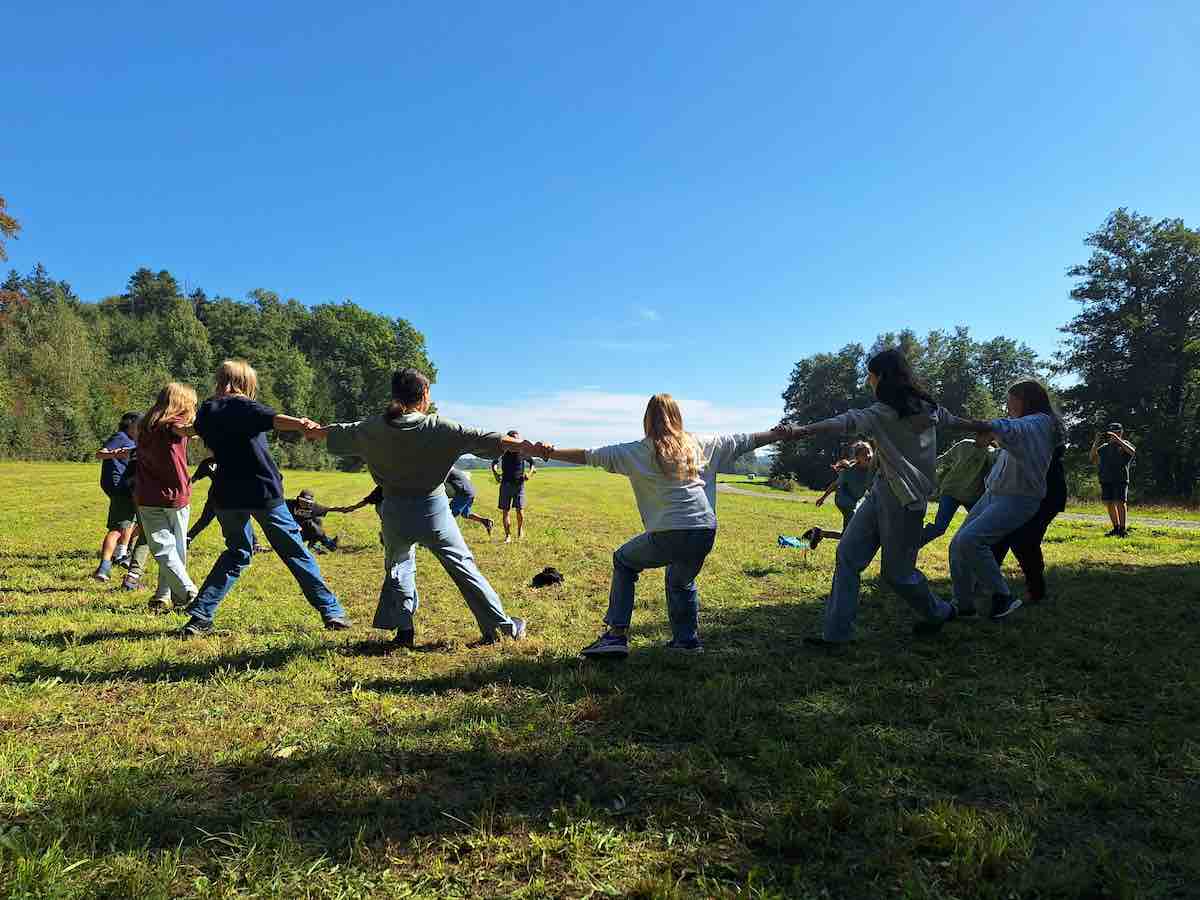
When children disappear from public spaces, something larger disappears as well. Encounters are lost. Networks of care weaken. Affection and collective references fade away. A vital dimension of community life erodes.
On the other hand, when a child can play freely within their territory, they reveal something far greater than individual well-being. They reveal the existence of a social environment capable of welcoming, protecting, and sustaining life.
Perhaps a child playing in a public square is one of the deepest indicators of territorial resilience available to us.
For this reason, the most significant transformations we witnessed throughout the movement did not emerge from large investments or sophisticated technologies.
They emerged when residents began to recognize themselves as part of a collective endeavour.
When educators, families, organizations, and community leaders started seeing play not as a complementary activity, but as a tool for strengthening communities.
When public spaces became occupied once again.
When children became visible once again.
When territories regained their ability to imagine.
At a historical moment marked by climate crises, political polarization, social exhaustion, and economic concentration, perhaps the most important innovation is not accelerating even further the systems that brought us here.
Perhaps innovation lies in recovering something we should never have lost: our capacity to cooperate.
During the Local Futures gathering, I repeatedly heard words such as rehumanization, belonging, participation, diversity, and territorial strengthening. This connection between play and local futures is no coincidence. By strengthening public spaces, bonds of trust, and networks of care, we are, in practice, weaving the foundation for living and resilient local economies. When a community recognizes itself as the producer of its own well-being, it naturally reverses the logic of external dependency: development ceases to be something that arrives from outside and becomes something that springs from exchanges, affection, and the appreciation of what is ours. Strengthening the territory is, therefore, strengthening the very engine that sustains more human and autonomous economies.
All of them reminded me of what we experienced through Brincar é Direito.
Because, ultimately, territorial cooperation does not emerge from structures.
It emerges from relationships.
It does not emerge from projects.
It emerges from human connections.
It does not emerge from external solutions.
It emerges from recognizing the intelligence already present within communities.
The documentary Brincar é Direito, originally released on YouTube, has helped expand this conversation beyond the territories where the movement took place. On July 31st at 11:30 p.m., the film will also premiere on Canal Futura and Globoplay, allowing this experience to reach new audiences and inspire new ways of thinking about development, participation, and social transformation.
Yet more than telling the story of a movement, the documentary proposes a reflection that I believe is increasingly urgent:
What if the future is not something we build for communities?
What if the future is something communities are already building themselves—despite public policies, and despite development models that continue to overlook them?
Perhaps the future is not being invented in financial centres, major international forums, or global innovation hubs.
Perhaps it is already being rehearsed every day in schools, public squares, urban peripheries, Indigenous territories, and communities where people still know how to care for one another, share knowledge, and collectively imagine new pathways for life.
And perhaps that is precisely why we need to start looking there again.
You can also read this essay on Medium.
References:
Freire, Paulo. Pedagogy of the Oppressed. New York: Continuum, 1970.
Freire, Paulo. Pedagogy of Freedom: Ethics, Democracy, and Civic Courage. Lanham: Rowman & Littlefield, 1998.
Krenak, Ailton. Ideas to Postpone the End of the World. Toronto: House of Anansi Press, 2020.
Krenak, Ailton. Ancestral Future. São Paulo: Companhia das Letras, 2022.
Santos, Milton. For Another Globalization: From the Single Thought to Universal Conscience. Rio de Janeiro: Record, 2000.
Top photo by Eduard Pretsi on Unsplash.
Middle photo by Pierre Vaucher on Unsplash.
Stay connected
Insights, stories, and events from Local Futures — exploring localization as a pathway to ecological balance and community resilience.
Follow our blog
Thoughtful writing for a world beyond the global corporate economy — delivered to your inbox.
Author: Rennê Nunes