
The Economics of Eating
The impact of our global economic system on food and farming is disastrous. Giant multinationals and financial speculators are making profit out of destroying diversified, regional farming systems at an alarming rate. In other words, our economic system is set on automatic pilot to drive people off the land into ever bigger cities. And in these mega-cities per capita consumption escalates.
This is part of the big picture, but when we look more carefully to the grassroots, we can find inspiring evidence for change in the opposite direction.
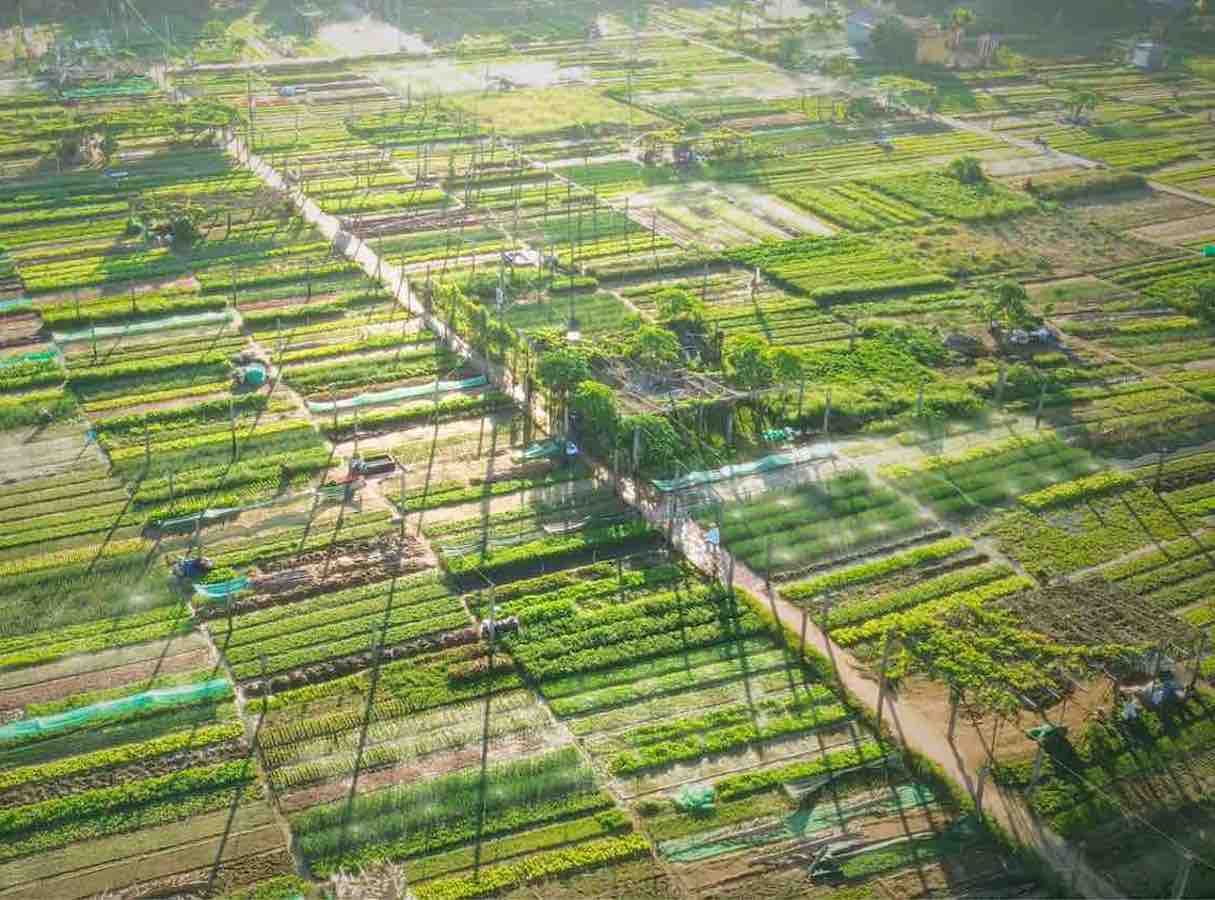
This year, during England’s driest July on record, a biodiverse estate in Somerset stayed green while the land around it baked. When drought sent rice yields plummeting in Telangana, India, a network of women farmers growing indigenous millets and pulses in polyculture maintained high yields and solid incomes. When floods scoured precious topsoil from California’s prize agricultural land, the fertile soils of an agroecological farm acted like sponges, slowing the flow of water while retaining their fertility. And when drought was followed by fire and flood in subtropical Australia, a small, species-rich agroforestry plot sprang back into productivity while conventional farmers struggled even to get seeds into the ground.
Stories like these are glimmers in the darkness of a planet and food system in deep crisis. They show that landscapes managed for diversity can act as resilient lifeboats in changing times — for humans and other species alike. They also show that food production, made so destructive by the export-led corporate economy, can become part of the solution.
This vision is driving powerful grassroots efforts to rebuild local food systems around the world. The movement connects ecological farming practices — including biodynamics, organic farming and permaculture — with local economic initiatives such as farmers’ markets, community-supported agriculture, food cooperatives and regional food hubs. Despite little support from governments or the media, these initiatives have multiplied in recent years because shortening the distance between field and fork is a genuine win-win. Diversified farms linked to local markets make it easier to produce food without toxic chemicals, create meaningful work and restore people’s connections with the land.
Our new film, The Economics of Eating argues that if we want a systemic shift towards healing ourselves and the living world, we need to change the economic forces driving food production. That means exposing how the global food economy contributes to social and ecological breakdown — and making the rebuilding of local food economies an urgent priority in a world facing accelerating crises.
The globalised, corporate-dominated industrial food system that is force-feeding environmentally destructive and unhealthy food on more and more people is not inevitable. It is the product of deliberate economic policies and a worldview that has systematically favoured global scale while marginalising and destroying local food systems based on small-scale ecological farms.
Global agribusiness are responsible for the widespread belief that only large-scale industrial production can feed the world.
The film challenges that assumption, tracing concepts such as “comparative advantage” to their colonial roots and showing how they helped justify converting local economies to export monocultures. It also points to evidence that diversified, localised food systems can produce more food per acre and per litre of water than industrial monocultures.
And while the global system relies heavily on energy- and mineral-intensive machinery and toxic agrichemicals to produce commodity crops — many of which never feed anyone — localised diversified systems employ more people while producing real, healthy food.
Genuinely regenerative agriculture — unlike the watered-down, corporate version of “regenerative” — means producing diverse, locally adapted crops and livestock that work together, emulating natural ecosystems and avoiding industrial chemical inputs. But this kind of diversity is difficult to accommodate within a large-scale, export-oriented food system. Harvests vary from week to week and season to season, while standardised technologies and processing facilities are designed for uniformity and scale. There are countless examples of tomatoes, apples and other crops being dumped or destroyed simply because they do not fit the machinery or the market.
Farmers can do their best within the existing system, and many are doing just that. But they cannot transform the food system on their own. Without policies and public demand that strengthen local markets and prioritise them over exports, the necessary transformation will not happen.
At the same time, the language of change is increasingly being adopted by the very institutions that have done so much to promote the industrial model. The giant multinationals, the World Bank and even FAO sound as though they are completely onside, using the language of biodiversity, regenerative agriculture, local solutions, food security and farmer-led approaches. However, tragically, they and our national governments are instead increasing financial commitment to so-called “smart farming”, which pushes farmers into increased reliance on high tech — robots, drones and satellite-linked systems — and into further debt.
The Economics of Eating argues that one of the most important things we can do for our landscapes, economic resilience and health is to localise economies — and challenge corporate power and control in the process.
The film lays out what this could mean in practice: shift subsidies, taxes and regulations, which have long favoured the big and global, towards the small and local. Where agricultural subsidies overwhelmingly support large monocultural producers, redirect them towards networks of small, diversified farms. Where red tape constrains cottage industries, remove it while applying stronger oversight to factory farms. Where supermarket chains receive tax breaks and publicly funded infrastructure, direct that support towards struggling independent outlets. And where governments award food-procurement contracts to huge global suppliers, shift spending towards small-scale, organic and local producers.
The reigning free-trade regime must also be challenged. It has handed ever greater power to multinational agribusiness and other corporations, even enabling them to sue governments over laws they oppose. We need rules that prioritise local production and procurement for local consumption, while upholding high labour and environmental standards.
The film calls on us to become food-systems activists. The challenge is not only to change policy but to change the ideas and assumptions that underpin the food system. Policy change could bring rapid improvements and remarkable healing, but it will not happen without broad public engagement: supporting local and regional agroecological farmers, participating where possible in organic food production, and building demand for a different kind of food economy.
We need more social and environmental organisations to join the movement for fundamental economic change. Once a significant share of the population demands such change, meaningful policy transformation becomes possible. In the meantime, highlighting the countless grassroots initiatives already demonstrating that people want healthier food and a healthier environment can strengthen local food economies and food security.
We can all contribute to this. We can support, join or start local food initiatives. We can also raise awareness about the urgent need to shift government support away from the global food system to bring our food economies home.
Change those policies, rebuild our relationships with local farmers and the land, and we can overturn a status quo that is harming people and the planet — and make nourishing food, thriving local economies and genuinely regenerative agriculture the norm.

Stay connected
Insights, stories, and events from Local Futures — exploring localization as a pathway to ecological balance and community resilience.
Follow our blog
Thoughtful writing for a world beyond the global corporate economy — delivered to your inbox.
Author: Helena Norberg-Hodge

Author: Local Futures
