


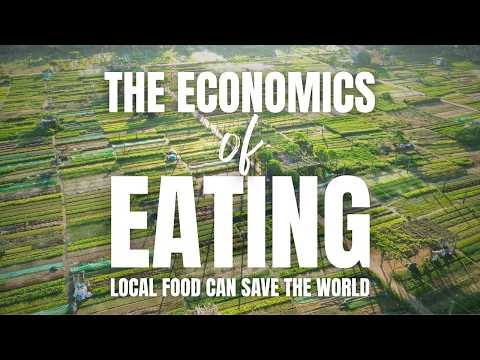
This 18-minute documentary takes us behind the food on our plates to uncover the hidden economics shaping our global food system.
Why does food grown thousands of miles away often cost less than food produced just around the corner?
In this short film, Helena Norberg-Hodge uncovers the global market that lies behind the food we eat. It's a system that drives biodiversity loss, accelerates climate change, harms our health, threatens livelihoods, and weakens local communities.

ABOUT THE FILM
The Economics of Eating
Local Food Can Save the World
A film by Jake Marquez and Maren Morgan
With Helena Norberg-Hodge and Local Futures
The film challenges the assumption that large-scale farms and long supply chains are the best way to feed the world. It explores how public policies, subsidies, infrastructure, and regulations have shaped a system where industrial, globally traded food is artificially cheap.
Meanwhile, farmers who care for soil, biodiversity, animals, and their communities are pushed to the margins, unable to compete fairly within a system that favours the big and the global.
Yet around the world, communities are building local food economies that support healthier ecosystems, meaningful livelihoods and stronger, more resilient communities.
Ultimately, the film argues that shifting taxes, subsidies, and policies away from the industrialised global market toward diversified, local food systems could transform the whole world - healing both people and planet.


Food system facts
Discover ten facts about the hidden costs of our global food system and the case for change.

Further resources
Explore the research, evidence and ideas behind the film, with sources covering 15 key topics.
Another food system isn’t just possible —
it’s already taking root.
Another food system isn’t just possible —
it’s already taking root.